Episode 281
281 - The Quiet Giving Up (And How to Keep Going)
This episode has been a long time coming. Not because it’s trendy — it isn’t. Not because it came from a book I was reading. But because I keep watching it happen to people I care about, and maybe it’s happening to you too. Today we’re talking about the quiet kind of giving up. Not the dramatic exit. The slow drift.
The Physical Therapy Analogy
It starts somewhere specific — a knee replacement, a back injury, a doctor’s instructions. The person begins. They do the work. It’s slow. It’s hard. It costs money. The results aren’t dramatic. And one day, without any announcement, they just stop. They think they’re being realistic. What’s actually happening is they’re trading a temporary cost for a permanent one. Jill knows this from the inside: four tendons in two ankles, two years of getting worse, and the moment someone asked the right question that sent her back to the exercises she’d abandoned. Both ankles fully recovered. You never would have known.
The Maps We Make in Our Heads
The injury version is just one form. There’s also the version where circumstances create a mental map of what’s possible in your life — and that map quietly stops you from ever trying. Small town, underfunded school, overwhelming family, not enough of anything. The ceiling you’ve accepted might not be your actual ceiling. It might just be a limited perspective on a limited environment that hardened into the shape of a fact.
Why It Doesn’t Look Like Giving Up
Giving up almost never looks like giving up. It looks like being realistic, not setting yourself up to fail, making sensible individual decisions — skip PT today, look for a job next week, start the diet after the holidays. Each call is defensible. When they stack into a pattern, the door doesn’t slam shut. It just slowly drifts closed while you’re not looking.
Learned Helplessness and the Intention-Action Gap
Psychologists call the pattern learned helplessness: when effort repeatedly seems to change nothing, the nervous system starts short-circuiting the attempts to protect you from further disappointment. And the intention-action gap — still wanting the thing, still fully intending to get back to it someday — widens until “someday” becomes a story you tell yourself about a future that never arrives.
What Actually Changes Your Ending
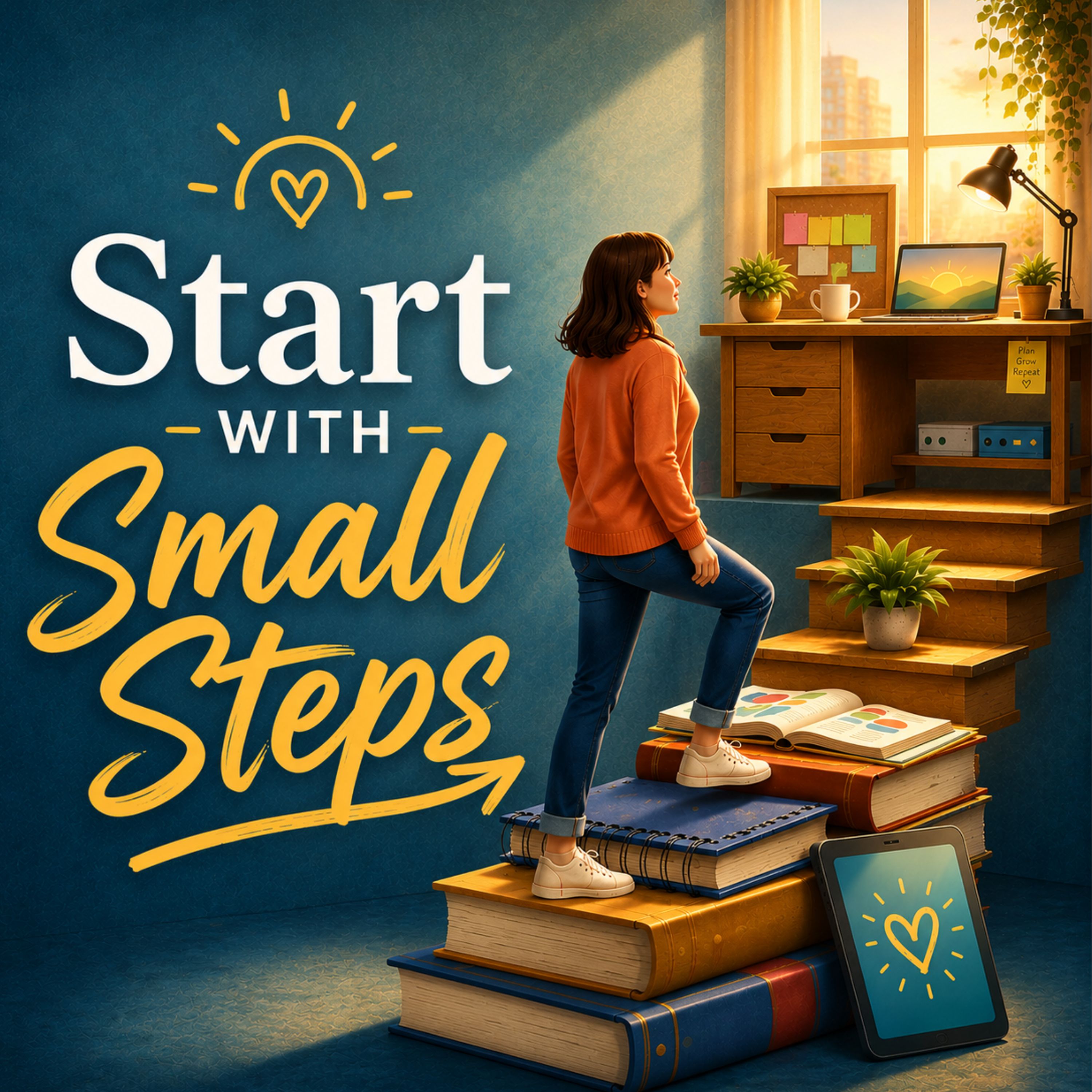
It’s not motivation — that’s real but unreliable. It’s not willpower — that depletes. It’s one clear, quiet, private decision: I’m not done. Not “I’m going to crush this.” Just: I’m not quitting. One small move. One vote cast in the right direction, the way James Clear describes in Atomic Habits. Every rep, every kept appointment, every application sent is a vote for the person you’re becoming — and those votes don’t have to be impressive. They just have to be cast.
You don’t have to accept the story that’s been handed to you. The version of you that keeps going, even slowly and imperfectly, is better than the version that stopped entirely.
Jill’s Links
http://jillfromthenorthwoods.com
https://www.youtube.com/@startwithsmallsteps
https://www.buymeacoffee.com/startwithsmallsteps
Email the podcast at jill@startwithsmallsteps.com
By choosing to watch this video or listen to this podcast, you acknowledge that you are doing so of your own free will. The content shared here reflects personal experiences and opinions and is intended for informational and inspirational purposes only. I am not a licensed therapist, life coach, or mental health professional. Any habits, strategies, or suggestions offered should not be considered a substitute for professional medical, psychological, or counseling advice. Results vary — small steps look different for everyone. You are solely responsible for any decisions or actions you take based on this content.